THE KALYANI LIGHT TANK
The Battle of the Light Brigands?

KSSL (Kalyani Strategic Systems Ltd) has presented its Light Tank Concept
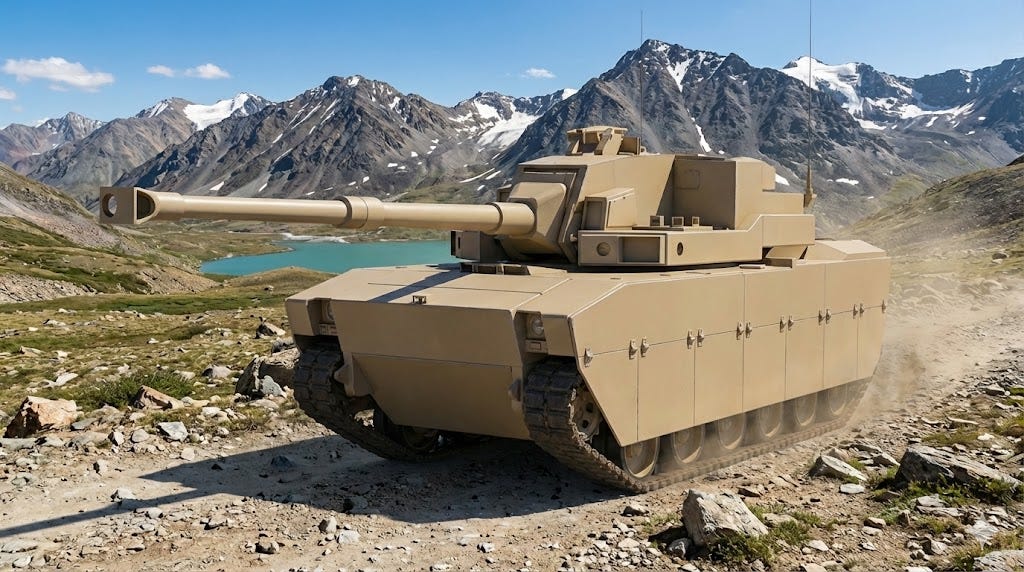
1. Core Design Philosophy: Unmanned Turret
The most distinct feature of this tank is its unmanned turret configuration.
Crew Position: Unlike traditional tanks where the commander and gunner sit in the turret, all three crew members (Commander, Gunner, Driver) are seated deep inside the hull, below the turret ring.
Advantage: This lowers the tank’s profile and significantly increases crew survivability. By isolating the crew from the ammunition and gun mechanisms in the turret, the design reduces the risk of casualties in case of a turret penetration.
Hull Construction: The design prioritizes a weight-optimized hull, likely keeping the combat weight under 25 tons to ensure it can be airlifted and traverse weak bridges in the Himalayas.
2. Firepower
Main Gun: It mounts a 105mm rifled gun, which is an indigenous development. This caliber is standard for modern light tanks (like the Zorawar and the Chinese Type 15), balancing weight with sufficient lethality to defeat enemy armor and bunkers.
Autoloader: Since the crew is in the hull, the gun is fed by an automatic loading system (AL) located in the turret.
Secondary Armament: The renders show a Remote Weapon Station (RWS) on the turret roof, likely for a heavy machine gun, which allows the crew to engage infantry or drones from under armor.
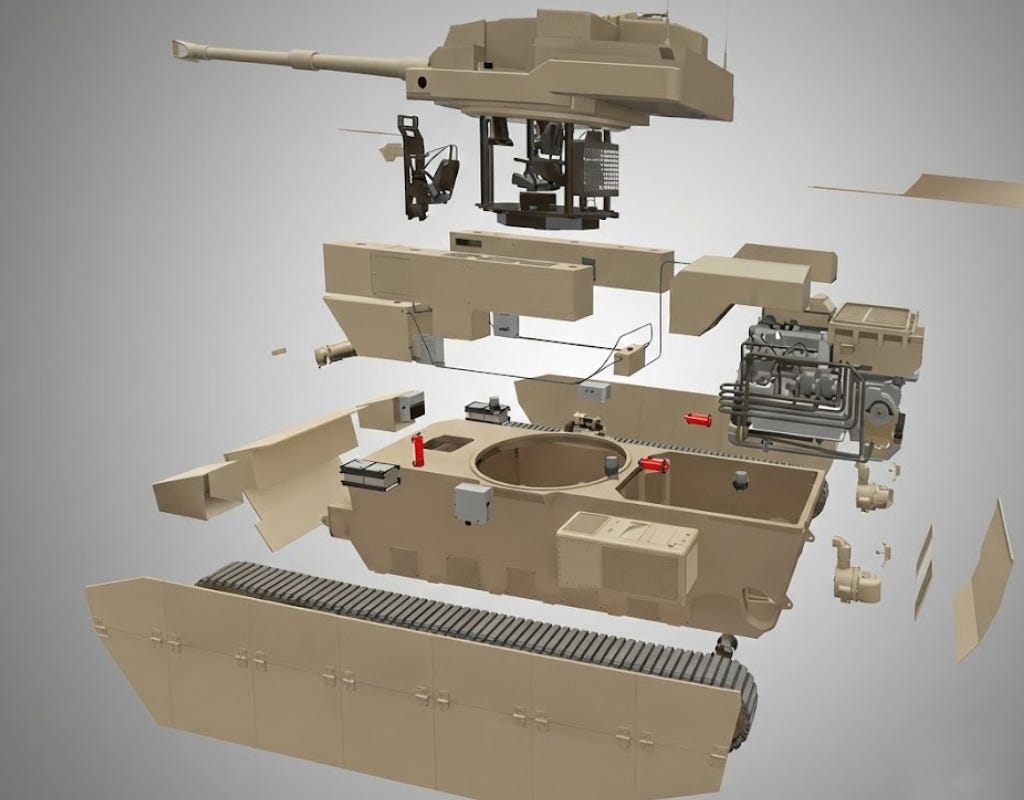
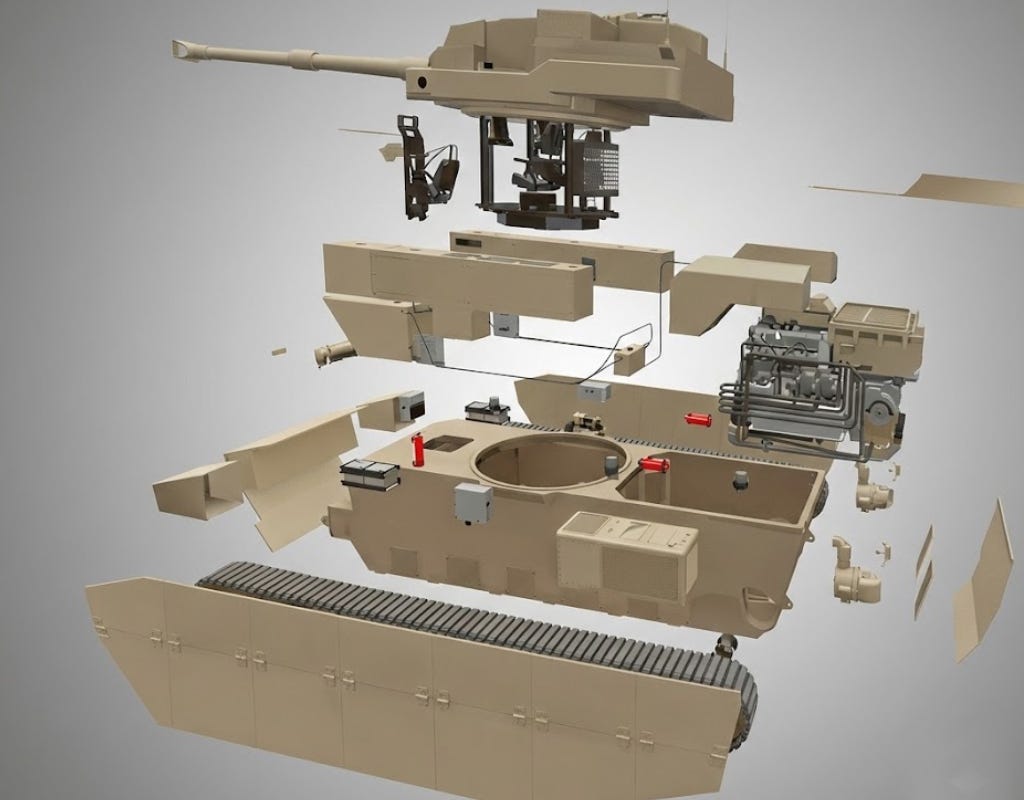
3. Mobility & Powerpack
Engine: It is reportedly powered by a Caterpillar (CAT) diesel engine, likely a variant of the C13 series.
Transmission: The engine is mated to a Renk automatic transmission (possibly the HSWL series), ensuring high torque for climbing steep mountain gradients.
Amphibious Capability: The tank features rear-mounted water jets (visible in similar concept analysis), making it fully amphibious and capable of crossing rivers and lakes in border regions.
Running Gear: It utilizes Composite Rubber Tracks (CRT) rather than traditional steel tracks. These reduce weight, noise, and vibration—critical factors for operating in sensitive avalanche-prone areas and for crew comfort over long durations.
4. Situational Awareness & Electronics
Electronic Cockpit: The crew operates the tank from a digital “cockpit” in the hull, using screens to view the battlefield.
Sights: The turret features an independent Commander’s Thermal Viewer (CITV) and a primary gunner’s sight, enabling “Hunter-Killer” operations (where the commander searches for targets while the gunner engages the current one).
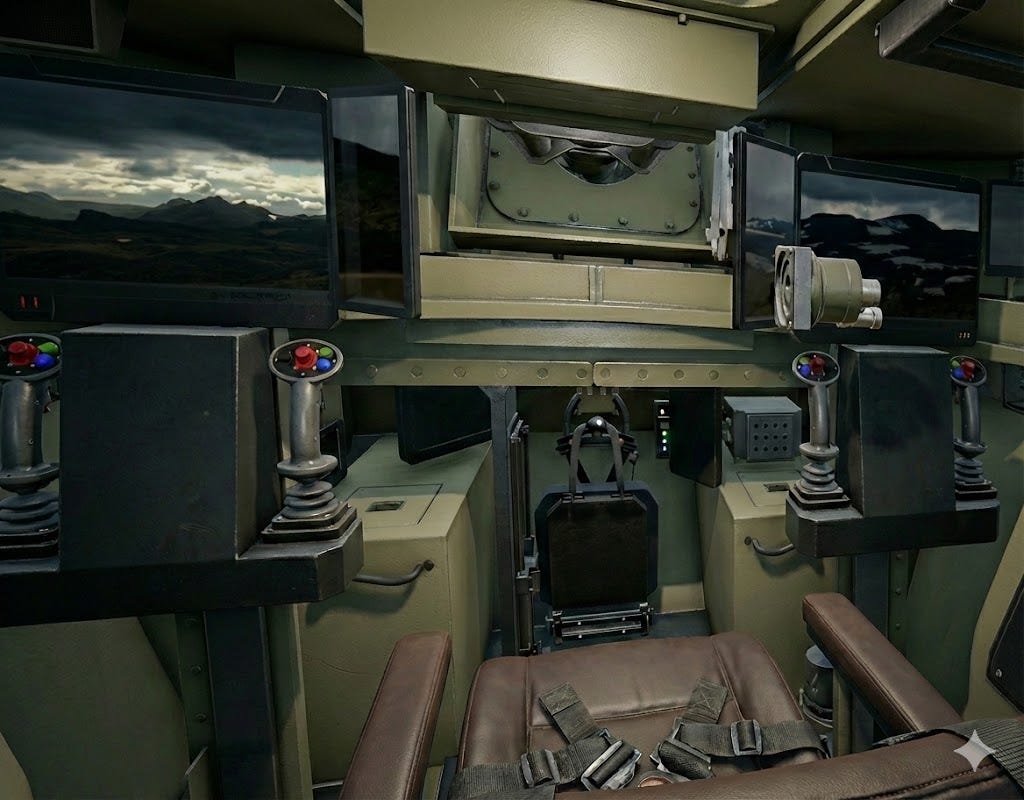
AI visualised interior based on CAD depictions
5. Strategic Context
Development Timeline: The platform was reportedly designed and engineered in just one year.
Status: A demonstration is scheduled for March 2026, with official trials expected to begin by September 2026.
Role: It is designed to be a direct counter to the Chinese Type 15 light tank, offering similar or superior mobility and firepower in the extreme altitudes of the Line of Actual Control (LAC).
A DEEPER DIVE
Based on the visual evidence from the renders and the latest available specifications, here is a breakdown of the turret design and the sensor suite of the KSSL - Light Tank.
1. Turret Architecture: The “Unmanned” Advantage
The defining feature of this tank is its Unmanned Turret configuration. This is a major future-proofing step.
Concept employed: The commander and gunner have been moved out of the turret and down into the more heavily protected hull, seated beside the driver.
Crew Placement: Unlike the DRDO Zorawar (which has a manned turret), the KLT places all three crew members (Commander, Gunner, Driver) side-by-side in the armored hull.
Benefits:
Crew Survival: The crew is completely isolated from the ammunition and the most exposed part of the tank.
Weight Savings: You no longer need to armor a large turret basket for people. The turret becomes a smaller, lighter, automated weapon station.
Enabler: This requires a reliable cassette-style autoloader for the main gun, separated from the crew compartment by a blast-proof bulkhead with blow-out panels.
Design Consequence: This allows the turret to be significantly flatter and smaller (low profile) because it does not need to house humans, life support, or basket space. The turret essentially becomes a “weapon pod” containing only the gun, the autoloader, and the optics.
Survivability: This isolates the crew from the ammunition. If the turret is penetrated and the ammo cooks off, the crew in the hull remains safe behind a blast-proof firewall.
2. Primary Sensor Suite (The “Eyes”)
Since the crew is deep inside the hull, they rely entirely on sensors to “see” outside. The turret is outfitted with a comprehensive optronic suite:
Commander’s Independent Thermal Viewer (CITV):
Location: The box-like structure perched on the highest point of the turret roof.
Function: This is a 360-degree panoramic sight with thermal imaging and day cameras. It allows the Commander to hunt for new targets independently while the Gunner is engaging a previous target (Hunter-Killer capability).
Gunner’s Main Sight (GMS):
Location: The recessed aperture situated directly next to the main gun mantlet (or slightly above it in some iterations).
Function: A stabilized sight containing a Thermal Imager, Day Camera, and Laser Range Finder (LRF). It is enslaved to the main gun for precise targeting.
Remote Weapon Station (RWS) Optic:
Location: Mounted on top of the turret, supporting the secondary machine gun.
Function: It has its own dedicated small camera and thermal sight, allowing the crew to engage infantry or drones from inside the hull.
3. Defensive & Tactical Sensors
To survive on a modern battlefield, the tank might need to use sensors to detect threats before they hit:
Laser Warning Receivers (LWR):
Likely Location: Small, blocky protrusions on the four corners of the turret roof.
Function: These detect if an enemy tank or missile team is “painting” the tank with a laser designator. It triggers an alarm in the cockpit and can automatically deploy smoke grenades.
Meteorological (Met) Sensor:
Location: A small mast usually at the rear of the turret.
Function: It measures wind speed, humidity, and atmospheric pressure. The Fire Control System uses this data to adjust the gun’s aim automatically for long-range shots.
360° Situational Awareness Cameras:
Location: Small cameras embedded around the hull and turret perimeter.
Function: These feed video to the “Glass Cockpit” screens in the hull, allowing the driver and commander to see through the armor without opening hatches.
4. “Hidden” Internal Sensors
The tank is reported to feature an AI-integrated diagnostics system.
Predictive Maintenance: Sensors on the engine, transmission, and gun barrel monitor heat, vibration, and wear. The AI analyzes this data to predict failures before they happen—critical in the freezing heights of Ladakh where breakdowns can be fatal.
Summary of Capabilities:
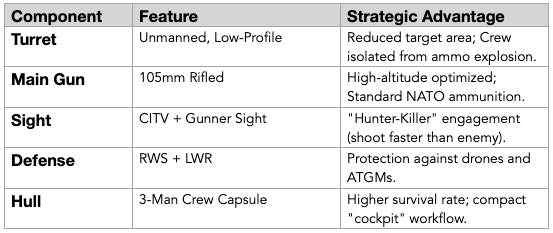
COMPARISON WITH ZORAWAR
While the KSSL Light Tank and the DRDO/L&T “Zorawar” are both 25-ton class light tanks, designed for the same strategic purpose: countering China’s Type-15 tank in the high-altitude deserts of Ladakh, however, they represent two different generations of design philosophy. The Zorawar follows a traditionalconfiguration (manned turret), while the Chakra adopts a futuristic configuration (unmanned turret).
Here is the comparative breakdown based on what can be spotted:
1. Turret & Crew Configuration (The Big Difference)
KSSL LT: Features an Unmanned Turret. All three crew members sit deep inside the hull, side-by-side.
Advantage: Higher survivability (crew is isolated from ammo) and a lower silhouette.
DRDO “Zorawar”: Features a Manned Turret (specifically the John Cockerill 3105 turret in prototypes). The commander and gunner sit in the turret basket, while the driver is in the hull.
Advantage: Better manual situational awareness (commander can pop the hatch to look around) and proven, traditional ergonomics.
2. Development Origin & Status
KSSL LT: A Private Sector initiative by Kalyani Strategic Systems Ltd.
Status: Prototype phase. Unveiled September 2025; first trials scheduled for September 2026. It is playing “catch up.”
DRDO “Zorawar”: A Public-Private Partnership (DRDO designed, L&T manufactured).
Status: Advanced Stage. Unveiled earlier; already completed high-altitude trials in Nyoma, Ladakh. Induction expected by 2027.
3. Engine & Power
KSSL LT: Powered by a Caterpillar (CAT) diesel engine.
DRDO “Zorawar”: Powered by a Cummins VTA903E-T760 engine (760 hp), with a future roadmap to use an indigenous 800 hp engine or a Rolls-Royce/MTU variant.
Commonality: Both use Renk transmissions and aim for a high power-to-weight ratio (approx. 30–40 hp/ton) to handle the thin air of the Himalayas.
4. Armament
Main Gun: Both use a 105mm Rifled Gun capable of firing Anti-Tank Guided Missiles (ATGMs).
Note: The Zorawar initially uses the Belgian Cockerill gun, while KSSL uses its own indigenous metallurgy and gun expertise (Bharat Forge is a global leader in artillery barrels). This should reflect in a lower cost for Kalyani Light Tank.
Secondary: Both feature Remote Weapon Stations (RWS) for machine guns to counter infantry and drones.
Summary Verdict
Zorawar is the “Safe Bet”: It is the official Army project, further ahead in development, and uses a proven (albeit manned) turret configuration. It will likely enter service first.
KSSL LT is the “Future Bet”: Its unmanned turret and crew capsule design are more advanced (similar to the Russian T-14 Armata concept), offering better protection per ton. It serves as a high-tech alternative or a “Phase 2” option should the Army desire a more survivable platform.
HOW COULD THE KSSL-LT BE ENHANCED FURTHER?
This is a solid foundation for a modern light tank. It has a low hull profile and a potent main gun. However, to make it a truly survivable and future-proof asset on the modern battlefield, one’d need to move away from the “boxy” geometry and integrate layered defense systems, all while strictly managing weight to maintain its “light” classification.
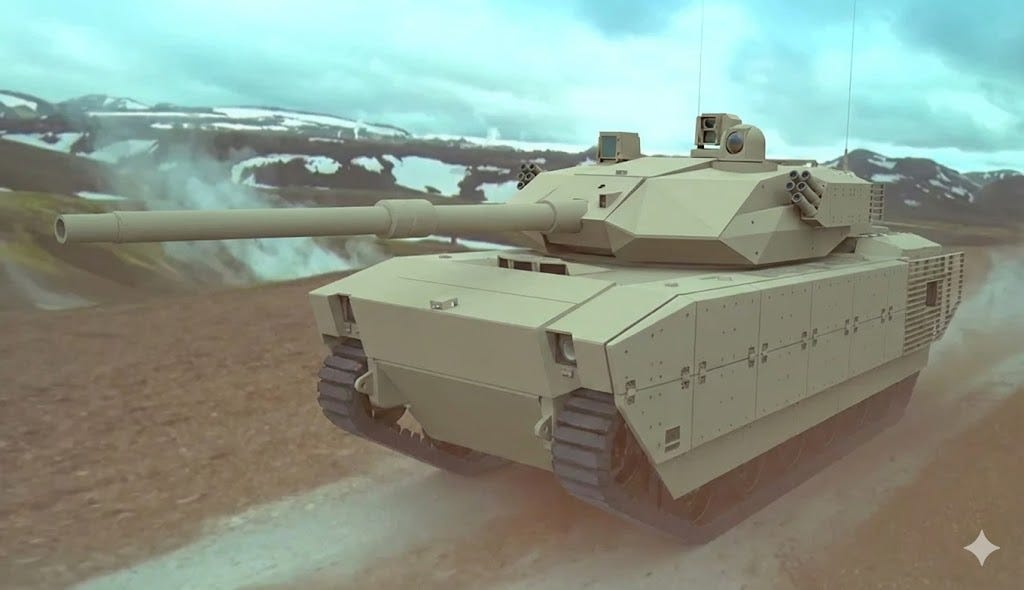
AI Rendition
Here are some suggestions for enhancing the design, focusing on protection and turret architecture.
1. Protection Enhancements: The “Layered Defense” Approach
For a light tank, relying solely on thick, passive armor is a dead end. It destroys mobility and deployability. Instead, one must adopt an “onion layer” approach to survival: don’t be seen, don’t be hit, and don’t be penetrated.
Active Protection System (APS - Hard Kill): This is non-negotiable for a modern light tank. One’d need to integrate a lightweight “hard-kill” APS (like Trophy-MV or Iron Fist Light).
How it works: Small radar panels detect incoming anti-tank guided missiles (ATGMs) and rocket-propelled grenades (RPGs). The system then launches a small counter-munition to intercept and destroy the threat before it hits the tank.
Benefit: This provides a level of protection against high-threat shaped charges that would otherwise require tons of passive armor.
Soft-Kill Suite: Before the hard-kill system is needed, we’d want to confuse the enemy.
Laser Warning Receivers (LWR): Alerts the crew if they are being painted by a laser rangefinder or designator.
Multi-Spectral Smoke: Upon LWR alert, the tank automatically deploys advanced smoke grenades that block visual, thermal, and laser spectrums, breaking the enemy’s lock.
Modular Composite Armor & Geometry:
Redesigning the Hull Front: The current lower glacis is large and relatively vertical. One could re-profile the entire hull front to a much steeper, wedge-shaped angle. This increases the effective thickness of the armor without adding weight and encourages incoming rounds to ricochet.
Base Armor: Replace basic steel with advanced, lightweight composite materials (layers of ceramic, high-hardness steel, and polymers).
Modular Add-ons: Design the hull and turret sides to accept bolt-on passive armor modules or lightweight Explosive Reactive Armor (ERA) tiles. This allows the protection level to be tailored to the specific mission threat.
2. Turret Design Enhancements: Smart & Sleek
The current turret is bulky and has many vertical surfaces. A redesign will be needed to improve protection through geometry and to integrate modern warfighting capabilities.
Low-Profile, Angular Geometry: The new turret should be significantly lower and shaped like a flattened wedge.
Sloped Sides: The turret sides must be heavily sloped inwards to deflect incoming fire and reduce the radar cross-section.
Narrow Front: The gun mantlet area should be as narrow as possible to minimize the target area.
Advanced Fire Control & Situational Awareness:
Commander’s Independent Thermal Viewer (CITV): (which is possibly there) A dedicated, fully stabilized panoramic sight on top of the turret for the commander. This allows for “Hunter-Killer” operations: the commander searches for the next target while the gunner engages the current one.
Remote Weapon Station (RWS): Replace a manual pintle mount with a fully stabilized RWS on the turret roof, armed with a heavy machine gun or automatic grenade launcher. The commander can operate this from under armor.
360-Degree Vision: Integrate a system of cameras around the tank to stitch together a seamless, “see-through-armor” view for the crew on their displays, which is critical for urban environments.
Summary of the New Concept
The evolved tank would be a sleek, low-slung predator. Its armor is sloped and modular, covered by the small radar panels and launchers of an Active Protection System. The turret is a compact, angular, unmanned pod with a powerful main gun, a panoramic sight, and a remote weapon station on top. The crew of three is safely nestled deep in the hull, operating the tank via screens and controls, with a level of protection and situational awareness far exceeding the original design.